
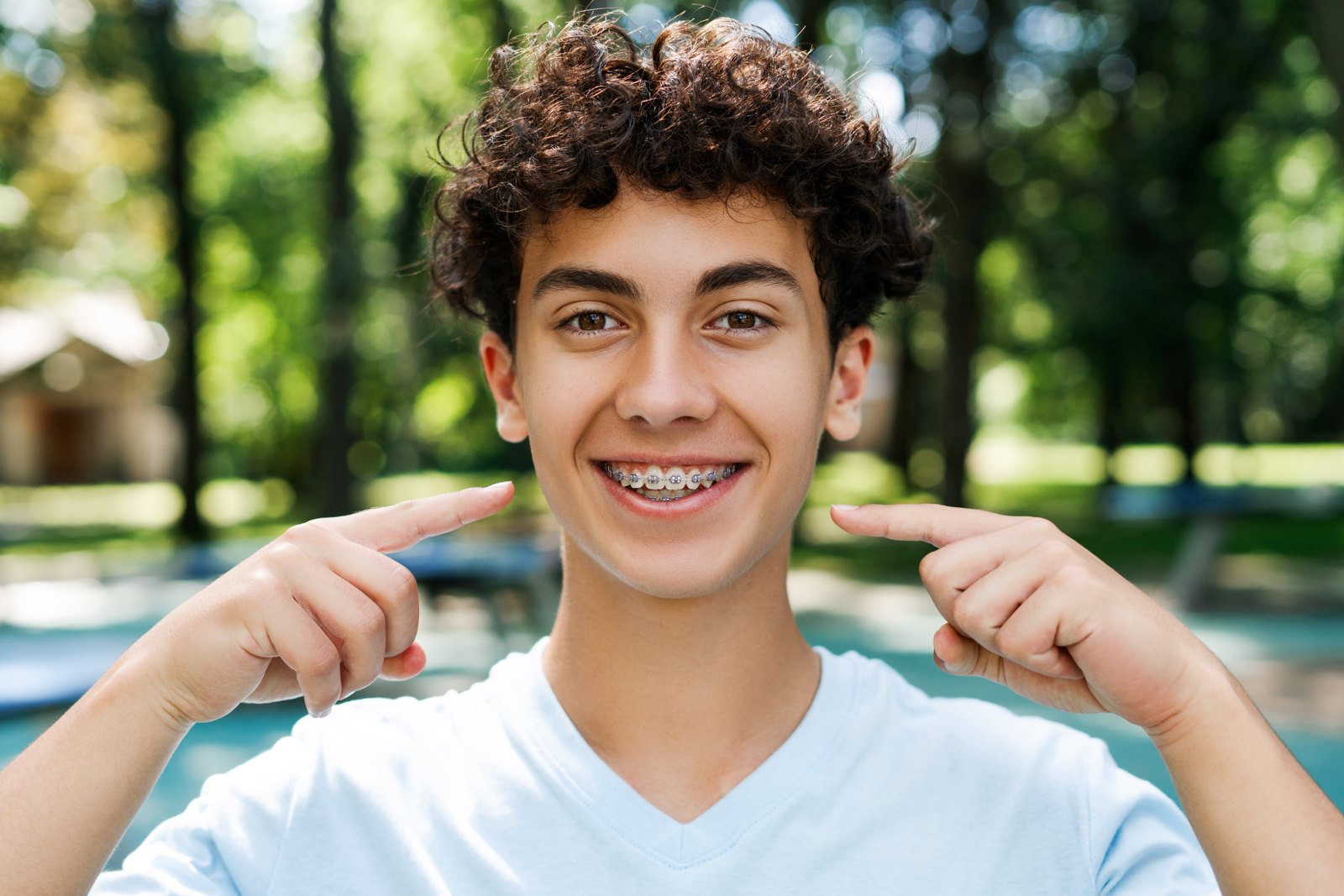
Flossing with braces works best when you thread floss under the archwire with a floss threader or stiff-ended orthodontic floss, clean both sides of every tooth down to the gumline, and repeat the routine once a day without skipping.
At David McInnis Orthodontics, we see patients in our Easley and Anderson offices who are surprised by how much longer cleaning takes once brackets go on. The good news is that the routine becomes quick and familiar within a few weeks, and this guide walks through the tools, the steps and the habits that make flossing with braces feel manageable instead of frustrating.
Why Does Flossing With Braces Matter So Much?
Brackets create new hiding places for food
Brackets and wires add dozens of small ledges where food and plaque can settle, especially along the gumline and between teeth. A toothbrush reaches the front surfaces well, but it cannot slide between neighboring teeth, which is exactly where cavities and swollen gums tend to start during treatment.
Clean teeth help treatment stay on track
Our brushing and flossing guide explains that flossing after meals helps keep your treatment time on track, and the reason is practical. Inflamed gums can puff up around brackets, make adjustments less comfortable and leave white marks on enamel that remain visible after the braces come off.
Which Tools Make Flossing With Braces Easier?
Floss threaders and orthodontic floss
A floss threader is a flexible plastic loop that lets you pull regular floss behind the archwire, while orthodontic floss has a stiff end built in so you can push it under the wire directly. Both work well, and many patients keep one type at home and the other in a backpack or purse for flossing after lunch.
Water flossers as a helpful addition
If you find that regular floss is not removing all the food around your braces, ask us about a water flosser. A water flosser sends a steady stream of water between teeth and around brackets, which many patients find helpful for loosening debris, although it works best alongside string floss rather than as a full replacement.
| Tool | Best use | Things to know |
|---|---|---|
| Floss threader | Pulling regular floss under the wire | Takes a little practice at first |
| Orthodontic floss | Quick threading with a stiff end | Easy to carry for school or work |
| Water flosser | Rinsing debris around brackets | Use it with floss, not instead of it |
| Interdental brush | Cleaning around brackets and under wires | Choose a size that fits gently |
How Do You Floss With Braces Step by Step?
Thread, wrap and slide
Start by threading the floss behind the wire between two teeth, then wrap the ends around your pointer fingers and leave a few inches of taut floss between your hands. Gently slide the floss between the teeth with a back-and-forth motion, avoiding any snapping motion that can irritate the gums.
Clean both sides and the gumline
Curve the floss against one tooth, move it slightly beneath the gumline, and then repeat the motion against the neighboring tooth before pulling the floss out and threading the next space. Working around the mouth in the same order every night helps you avoid missing spaces, especially on the back teeth that are harder to see in the mirror.
How Often Should You Floss When You Have Braces?
Aim for at least once a day
Our office guidance suggests flossing after every meal when you can, and at the very least you should floss thoroughly once a day. Many patients choose bedtime because it removes the food from the whole day and leaves teeth clean during the long overnight stretch when saliva flow drops.
Pair flossing with good brushing
Flossing works together with brushing for two minutes after meals using a soft-bristled, small-headed toothbrush and fluoride toothpaste. Angle the brush toward the gumline at about 45 degrees, and spend extra time around each bracket before you pick up the floss.
What If Your Gums Bleed When You Floss?
Mild bleeding often settles with consistency
A little bleeding during the first week or two of flossing with braces is common, and it usually means plaque has been irritating the gums. In many cases the bleeding settles as you keep flossing gently every day, because the tissue becomes healthier once the buildup is removed regularly.
When to mention it at your visit
If bleeding continues for several weeks, or your gums look very swollen around certain brackets, mention it at your next adjustment appointment or call our team. We can review your technique, suggest different tools and remind you to keep your regular dental cleanings every six months during treatment.
How Long Does Flossing With Braces Take?
Expect a slower start
The first few sessions may take ten minutes or longer while your hands learn how to guide the threader around each wire. That is completely normal, and most patients find their speed improves noticeably once the motions become automatic over the first couple of weeks.
Build a routine that fits your schedule
Keeping your floss, threaders and a small mirror in the same spot makes the habit easier to stick with, and pairing flossing with something you already do every night, such as brushing before bed, helps it become automatic. Some patients floss while listening to music or a podcast, which makes the extra minutes pass more quickly.
How Can Parents Help Kids Floss With Braces?
Supervise and encourage without taking over
Younger patients in braces for kids often need help learning to thread floss, and a parent checking in for a few nights can make a real difference. Let your child do the work while you watch, offer tips and praise steady effort rather than perfection, which helps them build confidence and responsibility.
Use simple reminders
Phone alarms, a chart on the bathroom mirror or a small reward for a full week of flossing can keep kids motivated. Teens usually respond best to reminders that focus on how their teeth will look when the braces come off, since nobody wants marks or stains on a newly straightened smile.
Does Flossing Change With Clear Ceramic Braces?
Ceramic brackets show buildup more easily
The technique is the same for metal and clear ceramic brackets, but our types of braces page notes that ceramic braces require slightly more attention to hygiene because they can show food particles and buildup more easily. Patients who choose ceramic brackets often like to floss and rinse after lunch so the brackets stay looking clean during the day.
Self-ligating brackets are simpler to clean around
Because self-ligating brackets use built-in clips rather than elastic bands, there are fewer places for food to catch. You still need to floss under the wire, but many patients find that cleaning around self-ligating brackets is a little quicker than cleaning around traditional ties.
When Should You Ask Us for Flossing Help?
Bring your questions to any appointment
Our team is glad to show you how to floss with braces at your first appointment and again at any visit if the routine feels hard. If you need help choosing the right toothbrush, toothpaste or floss, simply ask, because the right products make a big difference in how easy the routine feels at home.
Start with a conversation
If you or your child are thinking about orthodontic treatment and want to understand daily care before you commit, you are welcome to request a free consultation at our Easley or Anderson office. We will walk through the options, explain what care looks like at home and answer any questions you bring.
Frequently Asked Questions
Can I skip flossing if I use a water flosser?
A water flosser is a helpful addition, but it works best alongside string floss rather than replacing it. String floss scrapes plaque from the sides of each tooth in a way that water alone may not, so most patients use both for the best results.
Is it normal for flossing with braces to take a long time?
Yes, the first sessions often take several minutes longer than flossing without braces. As your hands learn the motion, most patients find the routine becomes much quicker within a few weeks.
What should I do if floss gets stuck on a bracket?
Gently pull the floss out from the side rather than yanking it upward, which could bend the wire or loosen a bracket. If a bracket feels loose afterward, call our office so we can check it at your next visit or sooner if needed.
Do I still need dental cleanings while I have braces?
Yes, regular dental checkups every six months remain important throughout treatment. Your dentist and your orthodontist work together to keep your teeth and gums healthy while your braces do their job.